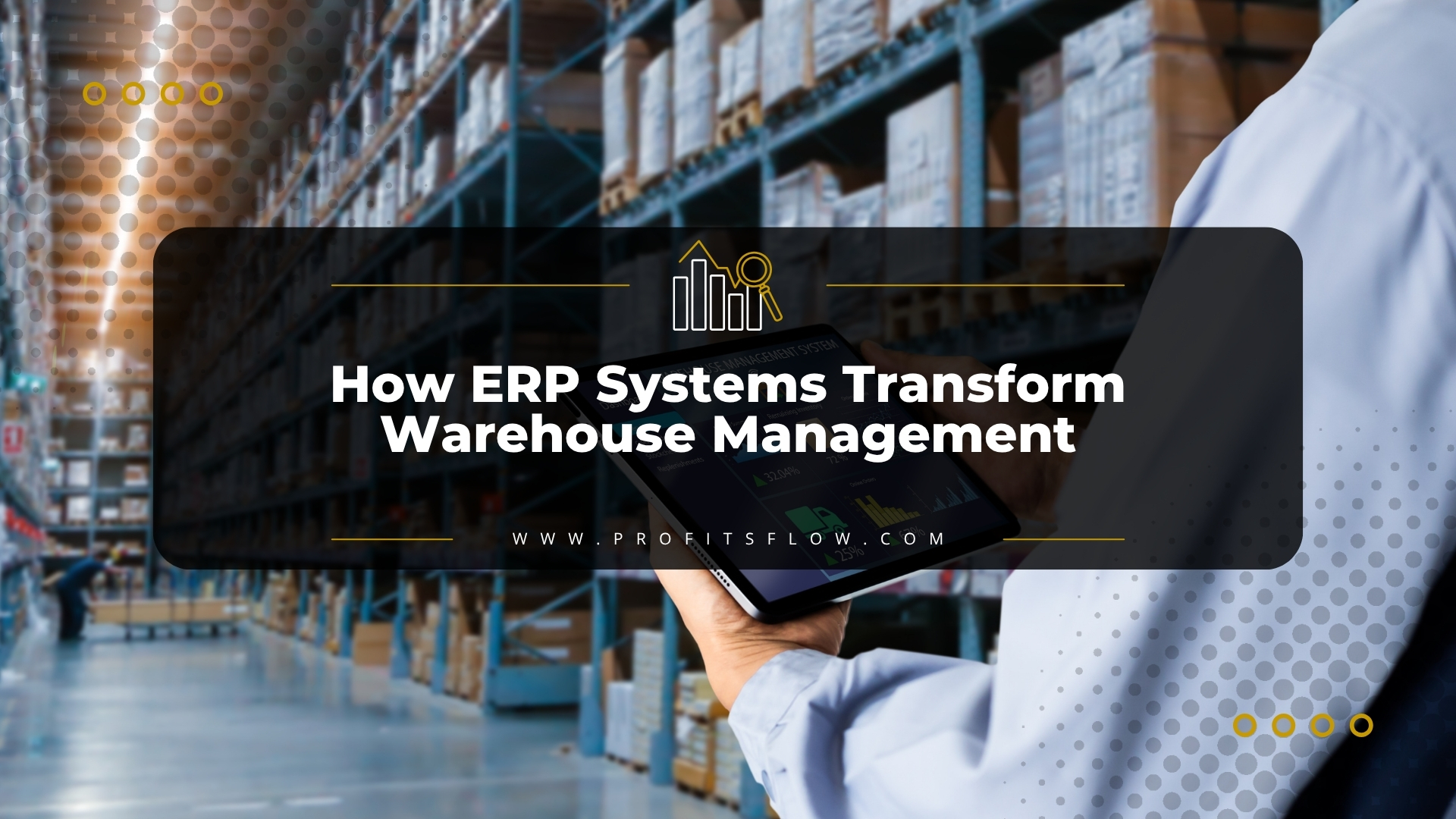
Warehouse management is a crucial area for many manufacturing companies, as it affects production efficiency, cost control, and supply chain effectiveness. Without an ERP system (Enterprise Resource Planning), manually recording tasks such as stock count becomes time consuming and inefficient, however by implementing an ERP system, companies will stay ahead and improve productivity in warehouse management. For Irish manufacturers, EFACS E/8 provides direct management for warehouses, which is accessed within the stock control module. This module holds accurate, up-to-date stock information, integral to warehouse management. Stock levels can be found on the system and automatically be adjusted by other procedures, such as receiving purchased goods and works order kitting.
The proper management of warehouses ensures that all components are stored and handled efficiently, reducing any delays in production and minimising downtime. It also maintains optimal inventory levels, not allowing for any losses due to overstocking and shortages. This enhances customer satisfaction, as it improves order accuracy and delivery speed. An ERP system produces an efficient warehouse management system that both reduces operational costs and heightens productivity levels. This is a key strength of the EFACS E/8 system in particular, where user role provides warehouse control. This gives control of warehouses to specific members of staff, offering improved management and control over stock movements.
Warehouse management on EFACS allows for certain locations for quarantine and reject stock. Each location may possess a powerful weight and volume monitoring system, which warns against exceeding limits, and monitors the specified levels.
Management over both single and multi-location parts, with traceable and serialised parts is possible. This allows the user to retain traceable and serial control over important items, while employing a simpler control over non-critical items. These traceable and serial features provide framework required by international quality regulations. For each traceable or serial part, a unique traceable batch is created for every individual receipt into stores. Each issue must also refer to a batch number to provide full traceability.
EFACS E/8 supports handheld and wall-mounted devices, keeping up to date with the ever-changing technology to ensure complete productivity within the warehouse. It uses integrated barcode readers to update the latest data while mobile, on the shop floor, or in the warehouse. The mobile applications are wide-ranging, with skills from delivery picking, works order, and stock taking. These stock counts are taken in real time, providing significant advantages for warehouses.
Effective warehouse management is optimal for success, and ERP systems are a key factor in ensuring that this management is of the highest standard. ERP systems provide businesses with the applications necessary, such as centralised inventory management and real-time reporting, to optimise stock levels, reduce costs, and improve overall efficiency. Without the use of an ERP system, businesses risk falling behind in a rapidly changing marketplace and environment. In contrast, companies that implement an ERP system will unlock their full potential and take advantage of an increasingly competitive marketplace, accelerating both productivity and profitability.